Analysis · 2026-11-03 · By bombong
Buying AI chips with debt: what GPU finance leases mean
In deals worth tens of billions of dollars announced this week, AI companies chose not to buy chips directly but to lease equipment purchased by financial firms. This article looks at why this structure has appeared now. It also sets out where the risk moves and what has not yet been confirmed.
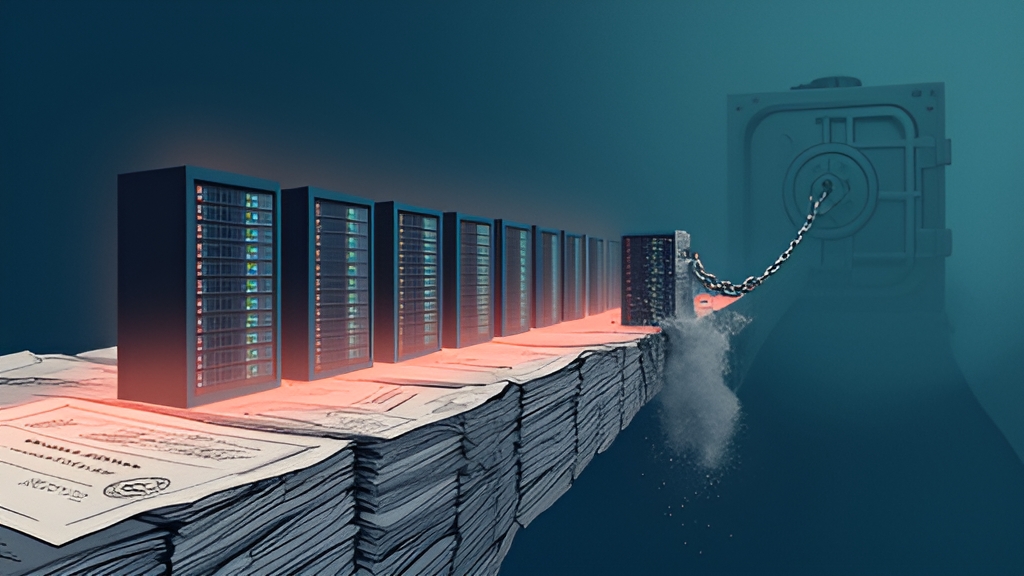
- Three banks and Blackstone announced a $63 billion financing in which an SPV buys Broadcom equipment and leases it to Anthropic.
- SpaceX disclosed that it signed a finance lease agreement of about $40 billion for AI chips and server equipment with an entity managed by Apollo.
- Amazon CEO Andy Jassy said most of AWS's 2027 capacity has been sold.
- Lease terms and conditions for neither deal have been reported, so it is not yet possible to confirm who bears the burden when chip values fall.
- This article interprets securing compute as expanding beyond hardware purchasing into a question of how financing is structured.
What does it mean to lease chips rather than buy them?
The large compute deals announced this week have something in common. The AI company does not buy the chips directly. An entity on the financial side buys the equipment and leases it to the AI company.
According to AI Times source, Bank of America, Citigroup, Morgan Stanley and Blackstone announced a $63 billion (about 83 trillion won) financing deal on October 26 local time. In this structure, a special purpose vehicle (SPV, an entity set up for a single transaction) buys Broadcom AI accelerators and networking equipment and leases them to Anthropic. On the same day, SpaceX stated in a filing that it had signed a finance lease agreement of about $40 billion for AI chips and server equipment with an entity managed by Apollo Global Management source. According to TechCrunch source, SpaceX described the deal as the largest committed GPU financing ever.
AI Times source reported that the Anthropic deal is large even among AI infrastructure debt deals. By this site's count, the keyword "Anthropic SpaceX compute deal" was covered this week by 7 news outlets and in 1 community post. The two deals can be read as compute procurement shifting from "equipment purchases" to "financial products." For practitioners, this means GPU capacity should be viewed not only as a hardware question but also as a financing question.
Size of this week's compute deals
Why secure compute through debt and leases now?
First, there are signals on the demand side. According to AI Times source, Amazon CEO Andy Jassy said on a video podcast on October 23 that it is hard to keep up with demand from AI labs and enterprise customers. Jassy said, "Most of our 2027 capacity has been sold." The same report said a substantial portion of AWS's 2028 supply has also been reserved.
Power and sites are also constraints. According to The Verge source, Anthropic noted two things in its S-1 (a US IPO registration statement): that data centers increasingly rely on natural gas, and that competition to secure power and sites with that power is intense. Anthropic officially announced that it had filed this registration statement with the US Securities and Exchange Commission source. By this site's count, the keyword "Anthropic IPO" was covered this week by 28 news outlets (3 in Korea) and in 6 community posts. As power becomes harder to secure, money is also flowing into alternative infrastructure. Starcloud, a low Earth orbit data center startup, raised $250 million at a post-money valuation of $2.3 billion source. NVIDIA participated in the round, as did Dunamu & Partners from Korea source.
When spare capacity becomes hard to rent on demand, the need to secure several years' worth of equipment in advance grows. This article interprets leases, which draw on financial firms' capital instead of requiring a large upfront purchase, as becoming the means to do so. Enterprise customers may also need to plan capacity earlier.
Order of compute deal news
- October 23Jassy: most 2027 capacity soldVideo podcast remarks
- October 25Musk posts GPU debt financing completedX post
- October 26SpaceX filingFinance lease with Apollo-side entity
- October 26Banks and Blackstone announce dealSPV leases Broadcom equipment
Who does the risk shift to?
Looking at the structure alone, the owner and the user of the equipment are separated. The SPV or the financial-side entity owns the equipment, and the AI company pays rent to use it.
This difference came to light in the SpaceX deal. According to AI Times source, CEO Elon Musk wrote on X on October 25 that debt financing for GPU purchases had been completed. A filing the next day confirmed that the deal is a finance lease in which an Apollo-side entity buys the equipment and leases it out source. The Anthropic deal is likewise structured with an SPV buying and leasing the equipment source.
In this structure, part of the burden of owning the equipment can be seen as shifting to the financial side. The AI company takes on an obligation to pay rent. However, the excerpt from the AI Times report source does not include the lease term or conditions. So it is not possible, from currently public information, to judge who bears how much of the loss when chip values fall. Readers reviewing GPU cloud or equipment contracts may want to ask the same question: "If the asset loses value, who bears the burden?"
Can financing backed by fast-depreciating chips last?
This is the biggest point of contention in this story. AI chips are assets whose uses and value change when a new generation comes out. Whether multi-year financing can keep being structured with such assets as collateral remains an open question.
A signal supporting sustainability is the report that a substantial portion of AWS's supply through 2028 has been reserved source. On the other hand, some things remain unconfirmed. The lease terms of the Anthropic deal have not been reported source. Anthropic's S-1 separately noted competition for power and sites source. The types of equipment used as collateral are also widening. The SpaceX deal covered GPUs source, while the Anthropic deal covered Broadcom accelerators and networking equipment source.
For this financing to continue, chip demand would arguably need to hold up throughout the lease term, and the power to run those chips would need to be secured as well. Currently available information leans toward strong demand. But it is too early to draw conclusions about sustainability until contract terms are disclosed. Practitioners should look at demand signals and contract terms separately.
Signals that will decide sustainability
Supporting signals
- Substantial share of AWS supply through 2028 reserved
- Collateral expanding from GPUs to Broadcom equipment
Still unknown
- Lease term and conditions
- Who bears losses when chip values fall
- Whether power and sites are secured
공통 Chip demand and power must both hold up throughout the lease term
- Estimate now the training and inference capacity you will need in 2027–2028, and decide whether to move up the timing of cloud reservations.
- When reviewing GPU cloud or equipment lease contracts, list term, early termination and generation-change (upgrade) conditions as separate items and compare them.
- Make a list of what would need to change to move your current training and inference code to a different accelerator, and check your dependence on a particular chip family.
Related terms
Sources
- Wall Street backs Anthropic's AI chip procurement with 83 trillion won in financing… buying Broadcom equipment to lease (AI Times)
- Deal Musk said was "$40 billion raised" confirmed as Apollo GPU lease (AI Times)
- SpaceX locks in $40B GPU financing deal with Apollo (TechCrunch)
- Amazon sells out next year's computing capacity amid surging AI demand... 2028 reservations also pile up (AI Times)
- Anthropic files S-1 with the SEC for proposed initial public offering
- Anthropic is burning gas to feed the AI boom (The Verge)
- Dunamu & Partners invests in US space data center company Starcloud (AI Times)